Medical Arts Surgical Group Robotic Knee Replacement Surgery

Robotic Surgery at Medical Arts Surgical Group

Robotic surgery, as an innovative approach in surgery, brilliantly fuses state-of-the-art computer systems with the intricate techniques of surgical procedures. Moving away from a pure reliance on a surgeon's tactile skill, it champions the exactitude of robotic devices. This method offers surgeons a pristine 3D visual of the surgical field. Its hallmark is the opportunity for less extensive incisions relative to classic surgery, promoting quicker recovery times for patients and diminished pain after procedures, earmarking it for many sophisticated surgical tasks.
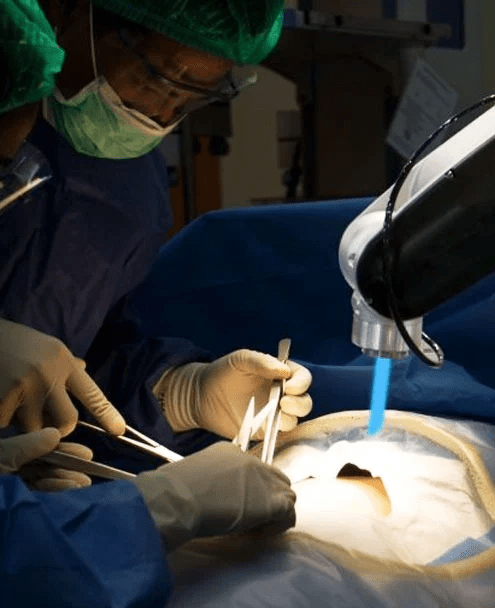

Robotic Surgery at Medical Arts Surgical Group

How Does Robotic Surgery Work?

Robotic surgery, by name, might sound like an automated process, but it's more of a collaborative effort with surgeons. It's a tool that empowers and enhances the surgeon's abilities. As the operation progresses, the surgeon operates from a central console, viewing a magnified image of the surgery site. They have full command over the robot, guiding it with utmost precision. The robot's extensions work in sync with the surgeon's intentions, replicating but also refining their movements. The endoscopic camera is pivotal, offering a vivid and granular insight, helping the surgeon make informed choices.

Medical Arts Surgical Group Robotic Knee Replacement Surgery

Applications of Robotic Surgery

Robotic surgery's reach isn't restricted to a single medical specialty. Its flexible characteristics and results-driven efficiency have propelled its usage in different medical branches. For instance, urologists commonly involve robotic systems in surgeries, notable among them being prostatectomies. Gynecologists lean on it for intricate operations like hysterectomies, given the preciseness it ensures. Cardiology experts have also endorsed its benefits, primarily for elaborate heart procedures. Equally, orthopedic surgeons see its significance, especially in high-precision operations such as those involving joints and the spine.

Medical Arts Surgical Group Robotic Knee Replacement Surgery
Applications of Robotic Surgery
The Future of Robotic Surgery

The Future of Robotic Surgery

The future direction of robotic surgery is compelling, showing potential to revolutionize medical surgical procedures. With technological strides being made consistently, surgical robots are expected to further perfect their craft, augmenting their accuracy and efficiency. A game-changing development in the offing is the synergy between robotic surgery and AI, which may offer instantaneous evaluations during surgical interventions, fortifying the surgeon's decisions. As the tech finds broader acceptance, it's forecasted that its economic demands will ease, catering to a more expansive patient demographic. The educational landscape for budding surgeons will reshape, with an emphasis on mastering robot-assisted procedures. A landmark potential of robotic surgery is its capability to eliminate geographical challenges, enabling surgeons to operate across distances, thus democratizing world-class surgical care.

Check our other pages :